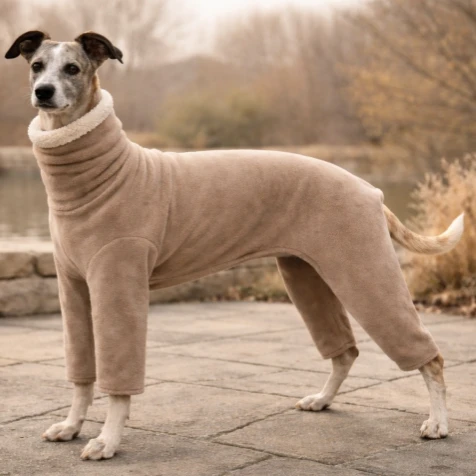
Sighthounds are famous for feeling the cold more than many other dog breeds.
But not all sighthounds experience cold weather in exactly the same way.
Some breeds need significantly more warmth protection than others depending on:
This is why some sighthounds seem perfectly comfortable in lighter layers while others begin shivering surprisingly quickly once temperatures drop.
Many owners assume all sighthounds have similar warmth needs because they share slim body shapes and fine coats.
In reality, there can be major differences between:
especially during:
Understanding these differences helps owners choose more appropriate clothing and warmth protection for their individual dog.
Why Sighthounds Feel The Cold So Easily
Most sighthounds were bred for speed, athleticism and efficient movement rather than harsh cold-weather protection.
Many have:
This combination makes them naturally more sensitive to:
Many sighthounds also have very little natural insulation around:
This is one reason so many owners notice behaviours such as:
during colder months.
However, different sighthound breeds experience cold very differently.
Italian Greyhounds Usually Need The Most Warmth
Among the most cold-sensitive sighthounds are usually Italian Greyhounds.
Because they are:
they lose body heat extremely quickly.
Many Italian Greyhounds need:
It is extremely common for Italian Greyhound owners to use clothing year-round depending on climate and weather conditions.
Whippets Often Need Strong Winter Protection
Whippets are generally more resilient than Italian Greyhounds but still feel the cold far more than many breeds.
Their short coat and low body fat mean many whippets benefit from:
especially during:
Many whippets remain comfortable in lighter layers during milder conditions but still require proper winter protection during colder weather.
Greyhounds Usually Tolerate Cold Slightly Better
Greyhounds are larger and often carry slightly more muscle mass than whippets or Italian Greyhounds.
This can help them tolerate cooler weather slightly better in some situations.
However, many greyhounds — especially retired racers — still feel the cold very quickly due to:
Many retired racing greyhounds are particularly sensitive to:
This is why winter coats and waterproof protection remain very important for many greyhounds during colder months.
Salukis & Lurchers Can Vary Significantly
Salukis and lurchers often vary much more depending on their:
Some salukis tolerate cooler weather surprisingly well due to slightly thicker feathering, while others still feel cold very quickly in wet or windy conditions.
Lurchers can vary enormously depending on what breeds they are crossed with.
Some need very similar warmth protection to whippets, while rough-coated lurchers may naturally tolerate colder weather more comfortably.
This is why observing the individual dog’s behaviour is often more important than relying only on breed assumptions.
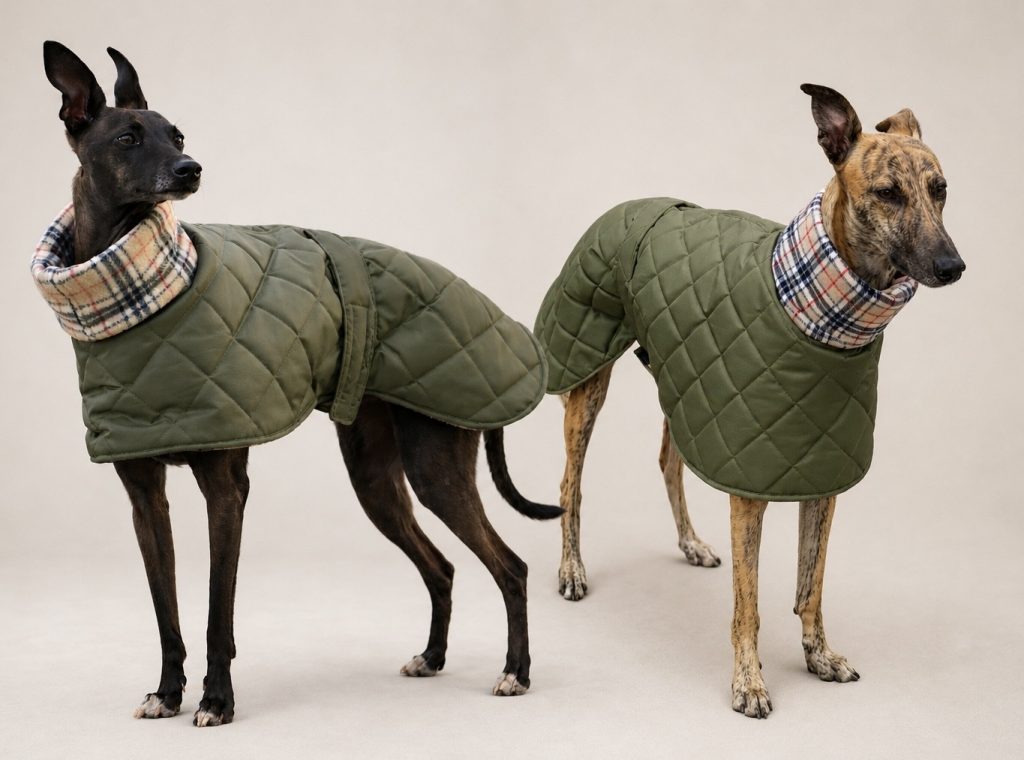
Why Weather Conditions Matter More Than Many Owners Realise
Cold sensitivity is not only about breed.
Weather conditions can dramatically change how much warmth protection a sighthound needs.
For example:
can all affect sighthounds very differently.
Many owners notice their dog struggles far more during:
than during dry cold conditions alone.
This is because wet weather increases heat loss extremely quickly in short-coated breeds.
For many sighthounds, staying dry is just as important as staying warm.
Indoor Warmth vs Outdoor Winter Protection
Some sighthounds may appear comfortable outdoors during activity but become cold very quickly once resting indoors afterwards.
This is especially common after:
Many owners therefore use:
depending on weather and temperature.
Italian Greyhounds in particular often benefit from:
throughout colder months.
Signs A Sighthound May Need More Warmth
Many sighthounds clearly show when they are struggling with colder weather.
Common signs include:
Some dogs are naturally much more cold-sensitive than others, even within the same breed.
Age, body condition and overall health can also influence how much warmth a dog needs.
Why Proper Coat Fit Matters So Much For Sighthounds
Sighthounds have very different body proportions compared to many breeds.
Their:
mean generic dog coats often:
A properly fitted sighthound coat should:
This becomes especially important during winter weather when exposed areas can quickly become cold or wet.
Choosing The Right Winter Coat By Breed
There is no single winter coat that suits every sighthound perfectly.
The best choice depends on:
For example:
Many experienced owners eventually build a small coat rotation for different:
Final Thoughts
Although all sighthounds tend to feel the cold more than many breeds, their warmth needs are not identical.
Italian Greyhounds are often the most cold-sensitive, while whippets, greyhounds, salukis and lurchers can vary depending on body condition, coat type and weather exposure.
Understanding how different sighthounds react to cold weather helps owners choose more appropriate warmth protection throughout the year.
For many owners, the right combination of:
can make a huge difference to their dog’s comfort during colder weather.