Finding the best winter coat for a whippet is not simply about choosing the thickest option available.
Whippets have a very different body shape and temperature sensitivity compared to many dog breeds, which means the wrong coat can quickly become uncomfortable, restrictive or simply ineffective in real winter conditions.
Many owners discover that generic dog coats often:
slip sideways
leave the lower back exposed
restrict shoulder movement
allow cold air into the chest
fail in wet weather
provide the wrong level of warmth for the season
Because whippets have:
short coats
thin skin
low body fat
deep chests
narrow waists
athletic movement
they often need winter clothing designed specifically for sighthound proportions and cold sensitivity.
The best winter coat for a whippet should not only provide warmth — it should also:
fit properly
stay secure during movement
protect against wind and rain
allow natural movement
match the weather conditions correctly
One of the biggest mistakes owners make is assuming all winter coats provide the same type of warmth.
In reality, different coats are designed for very different conditions.
Some are better suited to:
freezing temperatures
wet winter walks
windy conditions
lighter autumn weather
indoor/outdoor layering
transitional seasons
This is why understanding warmth levels and coat construction matters far more than simply choosing a coat based on appearance alone.
A properly designed whippet winter coat should feel:
secure without restriction
warm without overheating
protective without bulk
comfortable during both walking and resting
The goal is helping the dog stay warm, dry and comfortable during colder weather while still allowing completely natural movement.
Many experienced whippet owners eventually discover that having different coat options for different temperatures often works far better than relying on one coat for every situation.
Why Proper Fit Matters More Than Many Owners Realise
Warmth is important, but fit is equally critical.
A coat that technically fastens around the body can still perform badly on a whippet if it does not follow the dog’s shape correctly.
Whippets move very differently from broader breeds. Their long stride, deep chest and slim waist mean poorly fitted coats often:
twist sideways
ride upwards
leave gaps around the chest
expose the lower back
restrict movement
become uncomfortable during walks
A properly fitted whippet coat should:
follow the spine smoothly
cover the chest securely
stay balanced during movement
protect the lower back
allow natural shoulder movement
feel secure without looking tight
This is one reason many generic dog coats struggle on sighthounds.
Many are designed around broader body types rather than the curved back and narrow waist shape of whippets.
The difference between a generic fit and a properly designed sighthound fit is often immediately noticeable once seen side by side.
Different Winter Conditions Need Different Coat Types
Not every winter day requires the same level of warmth.
One of the biggest mistakes owners make is relying on a single coat for every season and weather condition.
In reality, whippets often benefit from different coat types depending on:
temperature
rain
wind
activity level
indoor vs outdoor use
how cold-sensitive the individual dog is
For example:
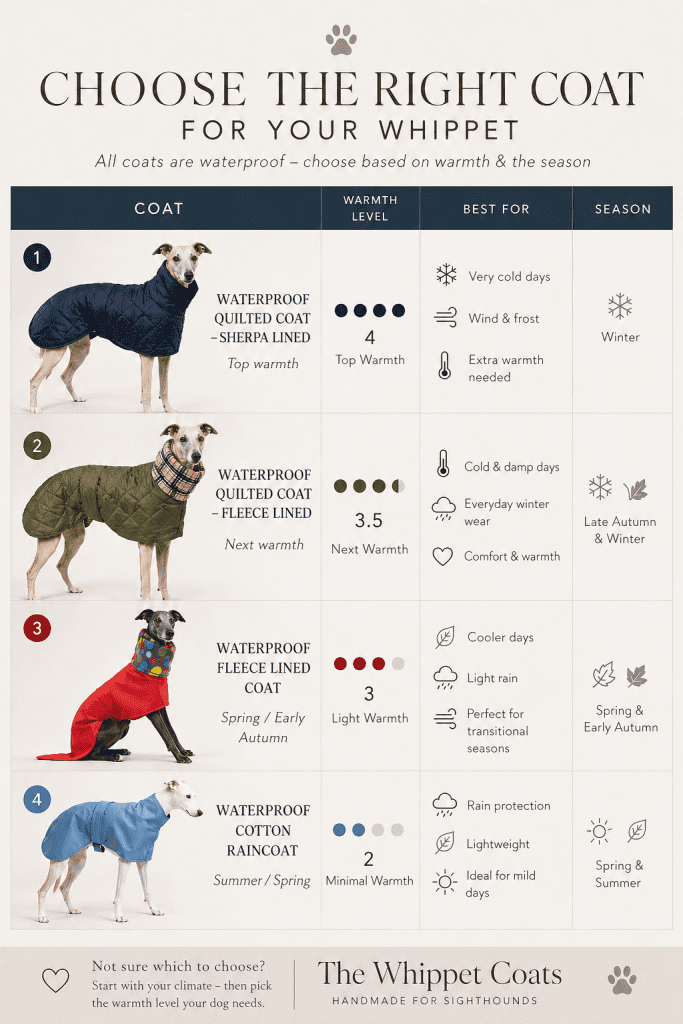
Lightweight Waterproof Raincoats
Often best for:
mild wet weather
spring rain
early autumn
windy but not freezing conditions
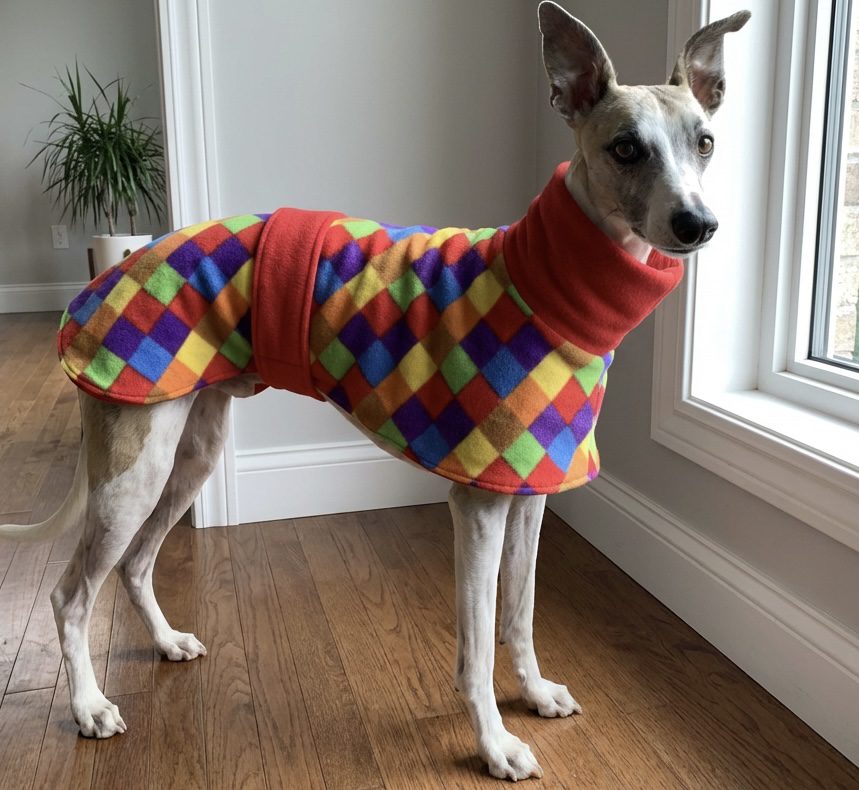
Fleece-Lined Waterproof Coats
Often ideal for:
everyday winter walks
damp cold weather
colder autumn temperatures
general winter use
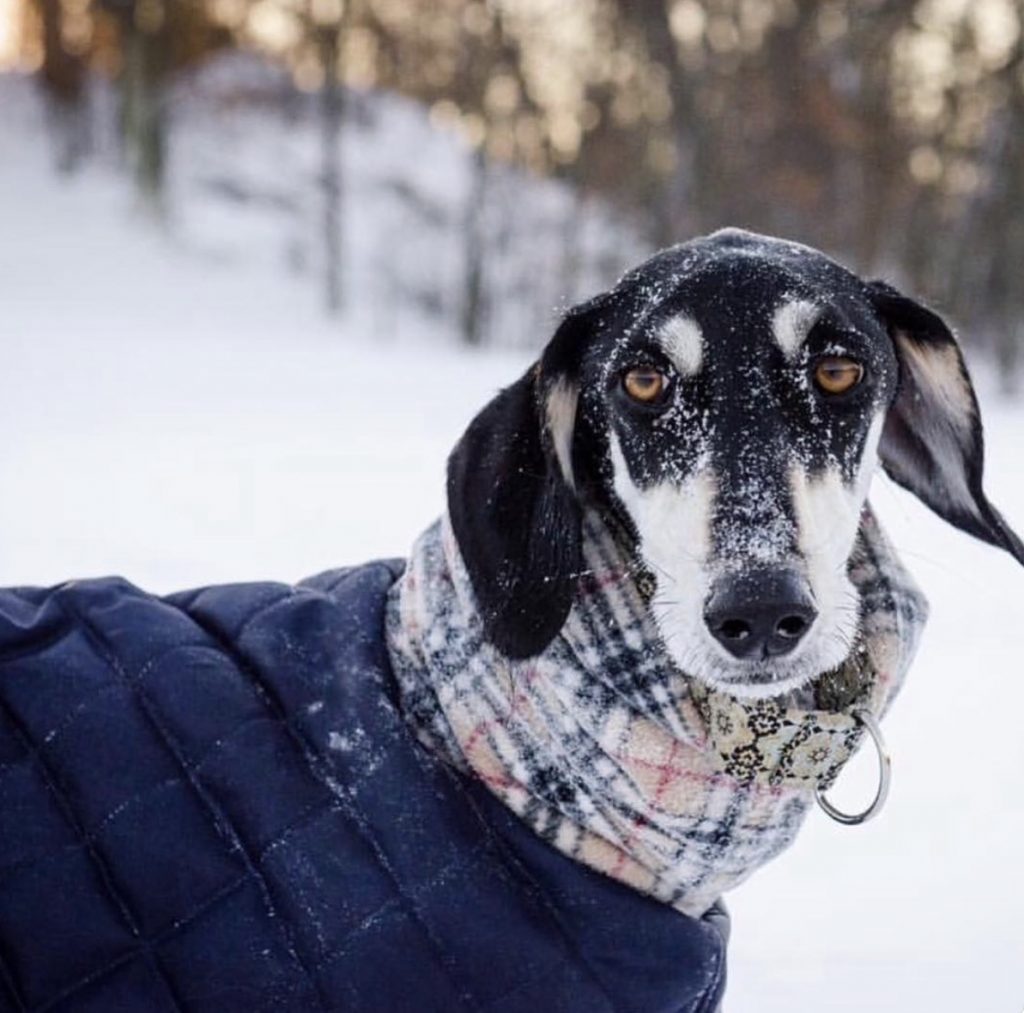
Quilted Sherpa-Lined Coats
Usually best suited to:
freezing temperatures
frost
snow
strong winter wind
very cold-sensitive whippets
Many experienced owners gradually build a small coat rotation rather than trying to make one coat work for every situation.
Waterproofing Matters More Than Many Owners Expect
Winter warmth is not only about insulation.
A whippet that becomes wet during cold weather can lose body heat surprisingly quickly, especially in wind or lower temperatures.
This is why waterproof outer layers are often one of the most important features in a winter coat.
A good waterproof coat helps:
keep the body dry
reduce wind chill
protect the chest and back
prevent cold rain soaking through
improve comfort during longer walks
For many whippets, damp cold weather often feels worse than dry cold temperatures.
This is particularly noticeable in:
rain
sleet
windy weather
wet grass
colder autumn conditions
A waterproof outer layer combined with proper insulation usually provides much better overall winter protection than thick fleece alone outdoors in wet weather.
The Importance Of Natural Movement
Whippets are athletic dogs designed for speed and flexibility.
A winter coat should never feel stiff, bulky or restrictive.
Poorly designed coats can:
restrict shoulder movement
pull across the chest
shift during walks
interfere with running
become uncomfortable during longer wear
A properly designed sighthound coat should allow the dog to:
walk naturally
stretch comfortably
run freely
lie down easily
curl up without restriction
The coat should move with the dog rather than resist movement.
This is one reason tailored sighthound-specific clothing often performs far better than generic dog coats designed for broader body shapes.
Not Every Whippet Needs The Warmest Coat
One thing many owners discover over time is that warmth needs vary significantly between dogs.
Some whippets are extremely cold-sensitive and need heavier winter protection very quickly.
Others remain comfortable in lighter layers for much longer.
Factors that influence warmth needs include:
age
body condition
coat thickness
indoor heating
activity level
weather exposure
general cold sensitivity
This is why fleece coats and lighter layers can still play an important role during:
transitional seasons
dry cooler weather
indoor/outdoor use
milder winter days
less extreme climates
Many owners prefer lighter fleece layers when full heavy winter protection is unnecessary but additional warmth is still beneficial.
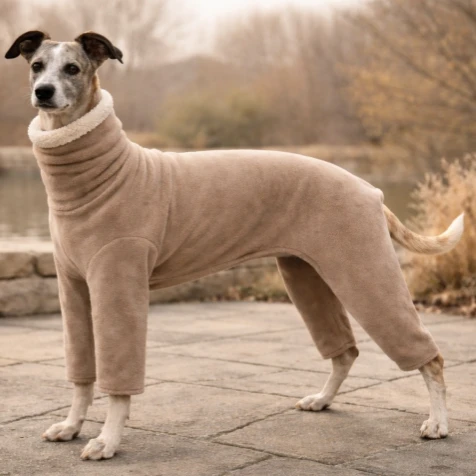
Indoor Warmth vs Outdoor Winter Protection Many whippet owners eventually realise that indoor warmth and outdoor winter protection are not always the same thing. A coat designed for freezing outdoor weather may feel too heavy indoors, while lightweight indoor layers may not provide enough protection during wet winter walks. This is why many owners use a combination of: waterproof winter coats outdoors fleece jumpers indoors pyjamas overnight lighter layers during transitional weather Different layers solve different comfort problems. For example: waterproof coats help protect against rain, wind and freezing temperatures outdoors fleece layers help maintain warmth indoors without excessive bulk pyjamas can help some whippets settle more comfortably overnight during colder months The goal is not simply maximum warmth at all times — it is choosing the right level of protection for the environment and temperature. Signs A Whippet May Need A Warmer Winter Coat Many whippets clearly show when they are uncomfortable in colder weather. Common signs include: shivering during walks reluctance to go outside lifting paws frequently in cold weather constantly seeking warmth afterwards trembling after rain curling tightly into a ball after walks Some whippets are naturally much more cold-sensitive than others, especially: elderly dogs puppies very slim dogs short-coated individuals dogs with lower body condition Watching behaviour is often one of the best ways to judge whether a coat is providing enough warmth and protection. Choosing The Best Winter Coat For Your Whippet The best winter coat is usually the one that: fits properly suits the weather conditions stays secure during movement keeps the dog dry provides appropriate warmth allows completely natural movement For many owners, this eventually means having different coat options for: rain freezing temperatures lighter winter weather indoor warmth transitional seasons Because whippets are naturally sensitive to cold, choosing the right winter clothing can make a huge difference to their comfort during colder months. Final Thoughts The best winter coats for whippets are not simply the thickest or most expensive options. What matters most is: correct fit appropriate warmth weather protection movement comfort proper chest and back coverage suitability for the specific conditions Because whippets have such unique body shapes and cold sensitivity, winter coats designed specifically for sighthounds often provide a much better balance of warmth, comfort and movement than generic dog clothing. Understanding the difference between coat types, warmth levels and real winter protection helps owners choose clothing that keeps their whippet comfortable, dry and protected throughout colder weather.