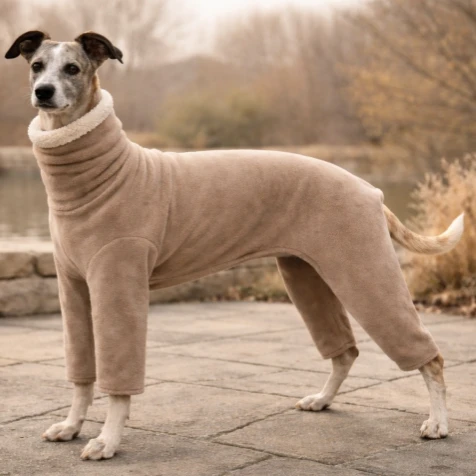
Whippets are famous for loving warmth.
Most owners quickly notice their whippet constantly searching for the cosiest place in the house — curling tightly into blankets, stealing duvets, lying beside radiators or refusing to leave a warm bed during colder weather.
Because whippets have such fine coats and very little body fat, they naturally feel the cold more than many other dog breeds.
But one thing many owners struggle with is knowing:
when is a whippet simply being cosy… and when are they actually cold?
Some cold-seeking behaviour is completely normal for sighthounds.
However, many whippets also show very clear signs when they are genuinely uncomfortable in colder temperatures.
Understanding these signs can help owners keep their dog more comfortable both indoors and outdoors during colder months.
Why Whippets Feel Cold So Easily
Whippets were built for speed and athleticism rather than insulation.
Unlike heavily coated breeds, they have:
This means they lose body heat relatively quickly, especially during:
Many whippets are also naturally sensitive dogs, so they often seek warmth and comfort instinctively.
This is one reason whippets are famous for:
While these behaviours are very common, persistent cold behaviour can sometimes suggest a dog may benefit from extra warmth.
Common Signs A Whippet May Be Cold
1. Shivering
One of the most obvious signs is shivering or trembling.
Some whippets begin shivering very quickly in colder weather, especially:
Occasional mild shivering may happen briefly, but persistent trembling usually suggests the dog is struggling to stay warm comfortably.
2. Constant Blanket Seeking
Whippets naturally love blankets, but some dogs become almost obsessed with finding warmth when cold.
You may notice:
This is often their natural way of conserving heat.
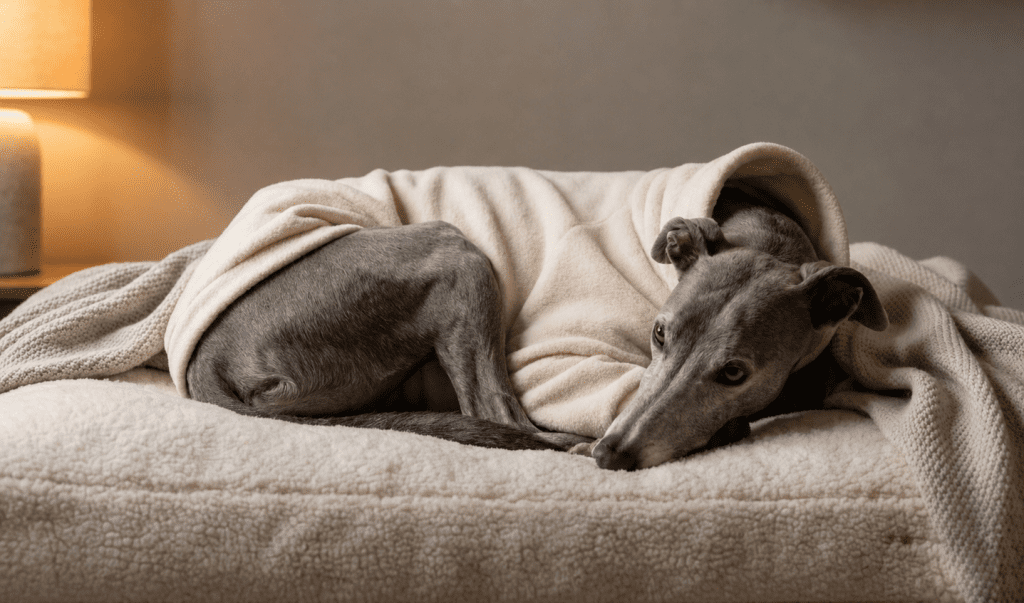
3. Curling Into A Tight Ball
Whippets commonly sleep curled up, but when very cold they often curl extremely tightly to reduce heat loss.
This posture helps protect:
Many owners notice this behaviour becomes much more frequent during colder months.
4. Reluctance To Leave Bed Or Blankets
Some whippets become noticeably reluctant to leave warm bedding during colder mornings or evenings.
You may notice:
5. Seeking Heat Sources
Cold whippets often gravitate toward:
Some dogs will actively reposition themselves throughout the day to stay warm.
6. Becoming Restless At Night
Some owners notice their whippet waking more often during colder nights.
This can include:
In some cases, the dog may simply be struggling to stay comfortably warm overnight.
Do All Whippets Need Jumpers Or Pyjamas?
Not necessarily.
Some whippets cope perfectly well indoors without extra layers, particularly in warmer homes or during milder weather.
Others are far more sensitive to temperature changes and seem noticeably more comfortable wearing:
Older whippets, puppies, very slim dogs and dogs with shorter coats often feel the cold more quickly than others.
The key is watching the individual dog rather than following a strict rule for every whippet.
Indoor Warmth vs Outdoor Warmth
Many owners notice their whippet behaves very differently indoors compared to outdoors.
A dog that seems comfortable during a walk may still become cold later once:
This is one reason many owners use:
Different layers solve different warmth problems.
You can read more about indoor warmth here:
https://thewhippetcoats.com/whippet-care/do-whippets-need-coats-indoors/
How To Keep A Whippet Comfortable In Cold Weather
Simple things often make a huge difference, including:
Because whippets naturally feel the cold more than many breeds, small adjustments can often improve comfort significantly during colder months.
Signs Your Whippet Is Comfortable
A comfortable whippet will usually:
The goal is not overheating — it is simply helping the dog stay comfortably warm.
Final Thoughts
Whippets are naturally cold-sensitive dogs, so many owners notice clear changes in behaviour during colder weather.
Shivering, blanket-seeking, curling tightly into a ball and constantly searching for warmth are all very common signs that a whippet may be feeling cold.
Watching your dog’s behaviour is often the best way to judge whether they may benefit from extra warmth indoors or outdoors.
For many owners, simple things like warm bedding, fleece jumpers or pyjamas during colder nights can make a noticeable difference to their whippet’s comfort and ability to settle during winter.