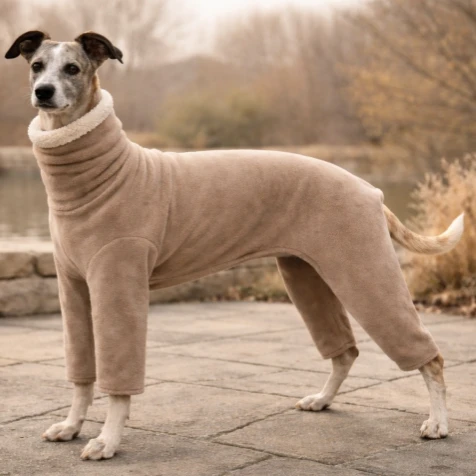
One of the biggest frustrations for sighthound owners is buying a dog coat that simply refuses to stay in place properly.
Many owners notice coats:
especially on breeds such as:
This problem is extremely common because most generic dog coats are not designed for sighthound body shapes.
Unlike many breeds, sighthounds have:
This unique shape means coats designed for broader dogs often struggle to stay balanced correctly.
A coat may technically “fit” around the chest but still move badly once the dog starts walking or running.
Many owners only notice the problem once:
This is especially noticeable during:
because movement exaggerates poor fit very quickly.
Why Generic Dog Coats Often Fail On Sighthounds
Most standard dog coats are designed around:
Sighthounds move very differently.
Their long stride and narrow body shape require clothing that follows the body much more precisely.
Without proper shaping, coats often:
This is why many sighthound owners become frustrated after trying multiple generic coat styles that never seem to sit properly.
Why Proper Balance Matters
A properly balanced coat should:
The goal is not simply making the coat tight.
In fact, coats that are too tight can:
The best-fitting sighthound coats balance:
all at the same time.
Deep Chests & Narrow Waists Create Unique Fit Problems
One of the biggest challenges with sighthound clothing is the dramatic difference between chest size and waist size.
Many Whippets and Greyhounds have:
This means coats designed for more square-shaped dogs often sit awkwardly once fastened.
The chest may fit correctly while:
A properly designed sighthound coat follows the natural curves of the body much more closely.
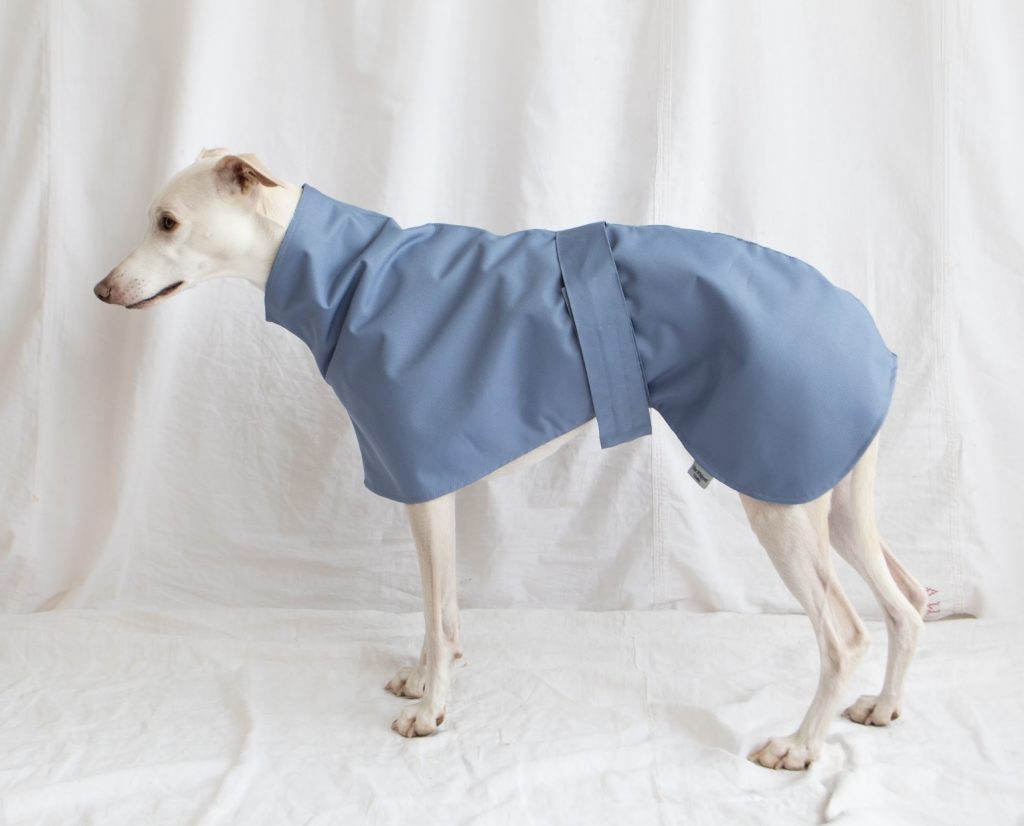
Why Movement Is So Important For Sighthounds
Sighthounds are naturally athletic dogs built for speed and flexibility.
Their movement is very different from many breeds, especially around:
A poorly fitted coat may look acceptable while the dog is standing still but become uncomfortable once the dog begins moving naturally.
This is why some coats:
The more active the dog becomes, the more obvious poor fit often becomes.
A properly designed sighthound coat should move with the dog rather than fighting against natural movement.
Why Coat Slipping Becomes Worse In Wet Weather
Rain and wet conditions often make poor fit problems even more noticeable.
Wet fabric can:
This is why many poorly fitted waterproof coats begin slipping badly during rainy walks.
If the coat already lacks proper balance or shaping, wet weather often exaggerates the problem.
Many owners notice:
much more during:
Proper Measurement Makes A Huge Difference
One of the biggest reasons coats slip badly is incorrect sizing.
Many owners understandably focus only on back length, but proper fit also depends on:
For sighthounds, correct measurement is especially important because of their unusual proportions.
You can read more here:
Why Many Sighthound Owners Eventually Choose Tailored Fit Clothing
After struggling with slipping or twisting coats, many owners eventually move towards clothing specifically designed for:
because proper shaping makes such a noticeable difference to:
A well-designed sighthound coat should feel:
without constantly needing adjustment during walks.
Final Thoughts
Dog coats slipping on Whippets and sighthounds is an extremely common problem.
Because sighthounds have such unique body proportions, many generic dog coats struggle to:
A properly fitted sighthound coat should:
For many owners, finding clothing specifically designed for deep-chested sighthounds makes a huge difference to overall comfort, fit and practicality during everyday walks and colder weather.