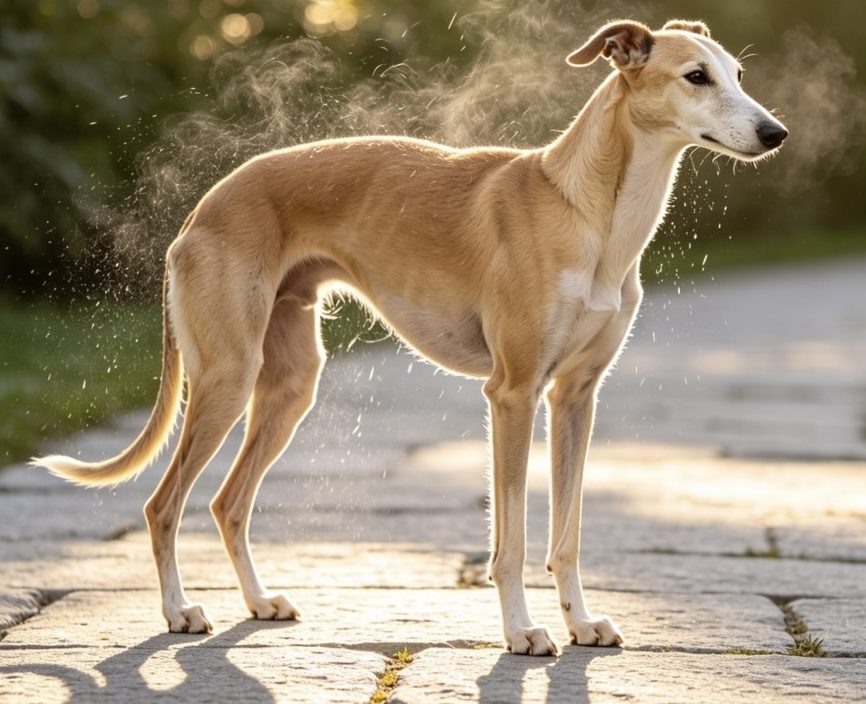
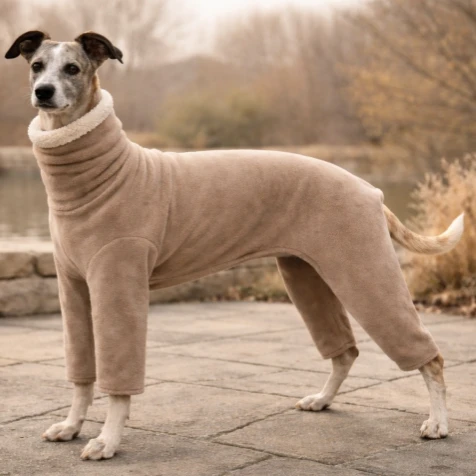
Whippets are well known for shaking, trembling and shivering far more than many other dog breeds.
For new owners, this behaviour can sometimes feel worrying — especially after walks, during colder weather or once back indoors.
But in many cases, shaking is actually a very normal part of whippet behaviour.
Because whippets have:
very short coats
thin skin
low body fat
lean muscle
little natural insulation
they are naturally much more sensitive to temperature changes than heavily coated breeds.
This means even slightly colder weather, damp conditions or wind exposure can affect them surprisingly quickly.
Many owners notice their whippet:
trembling after walks
shaking during colder weather
shivering after rain
vibrating while waiting outside
trembling while warming back up indoors
In many situations, this is simply the body reacting to cold and trying to generate warmth.
Whippets lose body heat quickly once exposed to:
wet weather
cold wind
damp ground
freezing temperatures
rain-soaked fur
This is one reason many whippets seem perfectly comfortable indoors but begin trembling outside once weather conditions change.
However, cold is not the only reason whippets shake.
Some whippets also tremble due to:
excitement
adrenaline
anticipation
nervous energy
overstimulation after exercise
This is why many owners notice shaking:
before walks
after zoomies
during excitement
while waiting for food
after returning home
Whippets are naturally very sensitive, expressive dogs, and trembling is often simply part of how they physically respond to stimulation and environmental changes.
The important thing is learning the difference between:
normal whippet trembling and
shaking that may suggest discomfort or illness.
Why Whippets Shake When They’re Cold When a whippet becomes cold, the body naturally tries to generate heat through rapid muscle movement. This is what causes shivering and trembling. Because whippets have very little natural insulation, they often begin shivering much faster than many other breeds once exposed to: rain cold wind damp weather freezing temperatures wet ground Some whippets are also far more cold-sensitive than others. Older dogs, puppies and very slim whippets often feel the cold particularly quickly. Many owners notice their dog trembling: after wet walks standing still outdoors during windy weather after getting caught in rain while waiting outside This is one reason many owners use: waterproof coats fleece-lined winter coats indoor jumpers pyjamas during colder nights to help maintain warmth more comfortably. You can read more here: https://thewhippetcoats.com/whippet-care/do-whippets-need-waterproof-coats/ https://thewhippetcoats.com/whippet-care/signs-your-whippet-is-cold/ Excitement Shaking vs Cold Shaking One thing that confuses many owners is that whippets also shake when excited. This type of trembling often happens: before walks during anticipation when greeting owners around food after zoomies during emotional excitement Excitement trembling usually looks different from cold shivering. A cold whippet may: curl tightly seek warmth lift paws shiver continuously appear reluctant outside An excited whippet often appears: alert energetic eager focused on something enjoyable Learning these differences becomes easier over time once owners recognise their dog’s normal behaviour patterns. Why Whippets Often Shake After Walks Many whippets tremble after walks even once back indoors. This often happens because: the body is warming back up adrenaline levels are dropping rain or dampness cooled the body muscles are recovering after exercise the dog is relaxing after stimulation Many owners notice their whippet immediately seeking: blankets warm beds sofas fleece layers sunny spots cosy sleeping areas after colder walks. This behaviour is extremely common in the breed. When Shaking May Need Veterinary Advice Although trembling is often normal in whippets, owners should still pay attention to unusual changes. Persistent shaking may need veterinary advice if it is: sudden severe continuous paired with pain accompanied by lethargy linked to limping or illness happening in warm conditions without explanation As with any breed, unusual behaviour changes should always be monitored carefully. Final Thoughts Whippets shake more than many breeds because they are naturally extremely sensitive to: cold weather changes excitement stimulation environmental changes In many cases, trembling is completely normal whippet behaviour rather than something dangerous. Because whippets have such short coats and low body fat, they often react very quickly to wet weather, cold wind and temperature changes. Understanding the difference between normal excitement trembling and genuine cold discomfort helps owners keep their whippet more comfortable during colder conditions.