
Why Do Whippets Sleep So Much? Understanding Sighthound Sleep Habits
If you have ever shared your home with a Whippet, you have probably looked over at some point and wondered:
How can one dog sleep this much?
They sleep on the sofa.
They sleep in their bed.
They sleep under blankets.
Sometimes they even seem to spend the entire afternoon moving from one comfortable sleeping spot to another.
For new owners, it can occasionally be surprising.
After all, Whippets are famous for their speed and athletic ability.
How can a dog capable of running at such incredible speeds spend so much time asleep?
The answer lies in the unique way sighthounds are built.
In reality, sleeping and resting are completely normal parts of Whippet life.
In fact, many experienced owners would probably say that sleeping is one of the breed’s greatest talents.
Are Whippets Naturally Sleepy Dogs?
The short answer is:
yes.
Whippets are well known for being calm and relaxed when they are not exercising.
Although they can be energetic outdoors, many are perfectly happy to spend long periods resting once they return home.
This balance is one of the reasons so many people enjoy living with the breed.
A healthy Whippet is often able to switch between:
- energetic athlete
- relaxed companion
with remarkable ease.
Many owners are surprised to discover that their dog can enjoy a run in the morning and then happily spend much of the rest of the day sleeping.
Sighthounds Are Built Differently
Whippets belong to a group of breeds known as sighthounds.
This group also includes:
- Greyhounds
- Italian Greyhounds
- Salukis
- Lurchers
These dogs were originally developed for short bursts of intense speed rather than endless activity throughout the day.
Their bodies are designed to be:
- fast
- athletic
- efficient
which means they often recover by resting deeply between periods of activity.
This pattern of exercise followed by relaxation remains common in many modern sighthounds.
How Much Sleep Is Normal?
Many adult Whippets sleep between:
- 12 and 18 hours per day
depending on:
- age
- activity levels
- weather
- routine
- individual personality
Puppies often sleep even more because of the demands of growth and development.
Older Whippets may also spend additional time resting as they age.
For most healthy dogs, a love of sleep is simply part of being a Whippet.
Comfort Is Very Important To Whippets
Anyone who lives with a Whippet quickly learns that these dogs take comfort seriously.
Many actively seek out:
- soft beds
- blankets
- sofas
- warm rooms
- sunny spots
throughout the day.
Because they have:
- short coats
- thin skin
- very little body fat
comfortable resting places often become particularly appealing.
This is one reason many owners discover their Whippet has an uncanny ability to find the softest and warmest spot in the house.
Why Sleeping Is Usually A Sign Of A Content Whippet
One reason many Whippets sleep so much is that they are often extremely good at relaxing when their needs have been met.
A Whippet that has enjoyed:
- appropriate exercise
- mental stimulation
- companionship
- a comfortable environment
will often be perfectly happy to spend much of the day resting.
Many owners eventually come to appreciate this balance.
Unlike some breeds that seem permanently on the go, Whippets are often content to switch off completely once they have finished their activities.
Puppies, Adults And Senior Whippets All Sleep Differently
Sleep patterns often change throughout a Whippet’s life.
Puppies
Young puppies require large amounts of sleep to support:
- growth
- learning
- development
It is completely normal for puppies to spend much of the day sleeping between short bursts of activity.
Adults
Healthy adult Whippets often develop a predictable rhythm of:
- activity
- relaxation
- sleep
Many owners notice their adult dog naturally settling into household routines.
Seniors
Older Whippets may sleep more than they did when they were younger.
This is often simply part of the ageing process and reflects changes in energy levels and recovery needs.
Why Whippets Seem To Love Sleeping Under Blankets
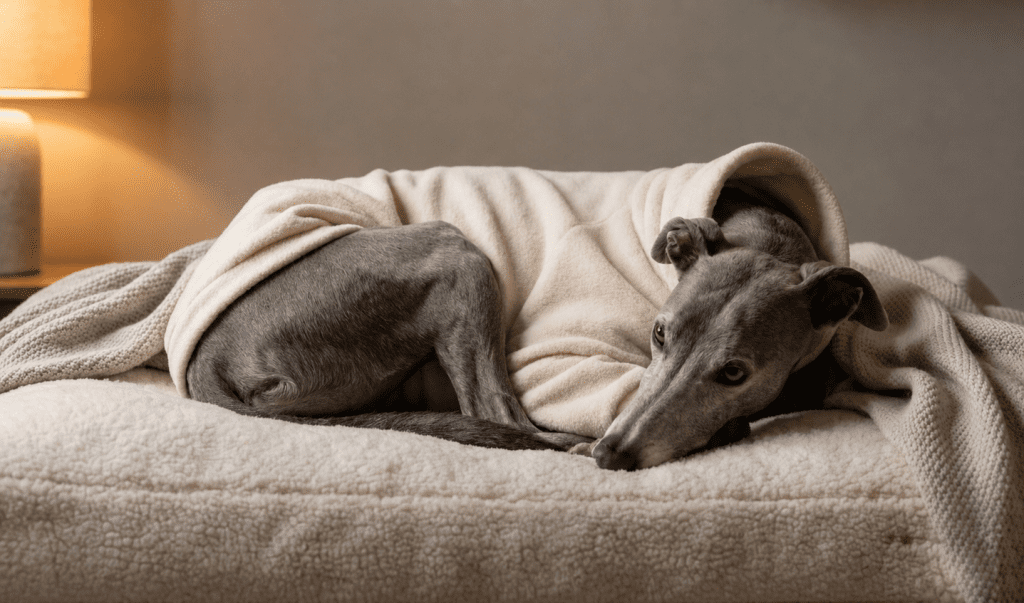
One behaviour that surprises many new owners is how determined Whippets can be to sleep under blankets.
Some dogs become experts at:
- burrowing
- nesting
- creating blanket caves
- disappearing completely beneath bedding
Their short coats and naturally lean build mean many enjoy the warmth and security that blankets provide.
For some owners, checking under the duvet before sitting down becomes a daily habit.
When Should Owners Be Concerned?
Although Whippets are naturally sleepy dogs, there is a difference between normal resting and unusual lethargy.
Owners should always pay attention to sudden changes in behaviour.
If a dog that is normally active suddenly becomes:
- unusually tired
- unwilling to exercise
- uninterested in food
- noticeably different from their normal self
it is always sensible to seek professional veterinary advice.
For most healthy Whippets, however, a love of sleep is completely normal and simply part of the breed’s nature.
Why Owners Often Grow To Love This Trait
Many people are initially attracted to Whippets because of their elegance and athletic ability.
What often surprises them is how easy these dogs can be to live with at home.
Their ability to go from:
- high-speed runner
to - professional sleeper
is one of the breed’s most endearing characteristics.
For many owners, a sleeping Whippet curled up under a blanket eventually becomes one of the most familiar sights in the house.
Final Thoughts
Whippets are naturally restful dogs and often spend a large portion of the day sleeping.
Their history as athletic sighthounds, combined with their love of comfort and warmth, means that long naps are usually a completely normal part of life.
Whether they are stretched out on a sofa, curled up in a bed or hidden beneath a blanket, most Whippets are simply doing what Whippets do best:
enjoying a well-earned rest between adventures. 🐾😴