If you’re looking for the best coat for your whippet or greyhound, choosing the right one makes all the difference to their comfort in cold weather.
If your whippet hesitates on walks, lifts a paw, or refuses to settle when it’s cold, it’s not stubborn behaviour — they’re uncomfortable.
Whippets, greyhounds and Italian greyhounds feel the cold far more than most breeds. With very little body fat and short coats, they lose heat quickly, especially in damp, windy or cold conditions.
Choosing the right coat isn’t just about style — it’s what keeps your dog warm, comfortable, and willing to go outside.
Unlike many other breeds, sighthounds don’t have natural insulation.
That means:
This is why a properly fitted coat makes such a noticeable difference to their comfort.
Your dog will often show clear signs when they’re cold:
If you see these behaviours, your dog is trying to conserve heat.
As a general guide:
Sighthounds are particularly sensitive to damp and wind, which can make them feel colder than the temperature suggests.
Not all dog coats are designed for sighthounds.
The best coats should:
Whippets and greyhounds have deep chests, narrow waists and curved backs.
A good coat should:
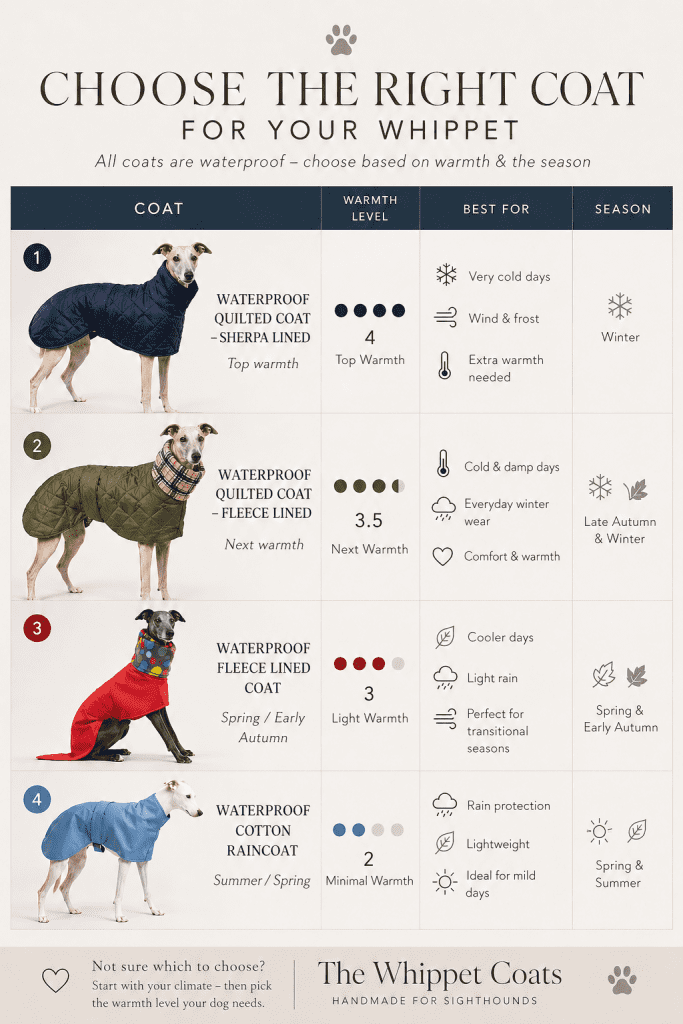
Different conditions require different levels of protection:
Choosing the right level of warmth is key — not every coat works for every situation.
A coat should never restrict your dog.
If your dog:
then the fit or design isn’t right.
The best coat depends on when and how your dog feels the cold.
For wet weather and everyday outdoor use:
Shop Whippet Coats
https://thewhippetcoats.com/product-category/coats/
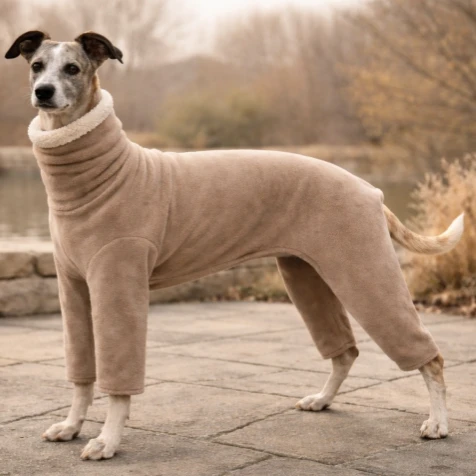
For layering or added warmth indoors:
Shop Whippet Jumpers
https://thewhippetcoats.com/product-category/whippet-greyhound-jumpers/
For colder homes or overnight warmth:
Shop Whippet Pyjamas
https://thewhippetcoats.com/product-category/whippet-greyhound-pyjamas/
Many owners use a combination depending on the season and temperature.
If your dog is still showing signs of being cold:
Comfort should always come first.
The best coat for a whippet or greyhound is one that fits properly, stays in place, and provides the right level of warmth for the conditions.
When the fit is right and the warmth is correct, you’ll see the difference immediately — your dog will move more freely, stay relaxed, and be far more comfortable outdoors.
For sighthounds, a good coat isn’t optional — it’s essential.